
AIR
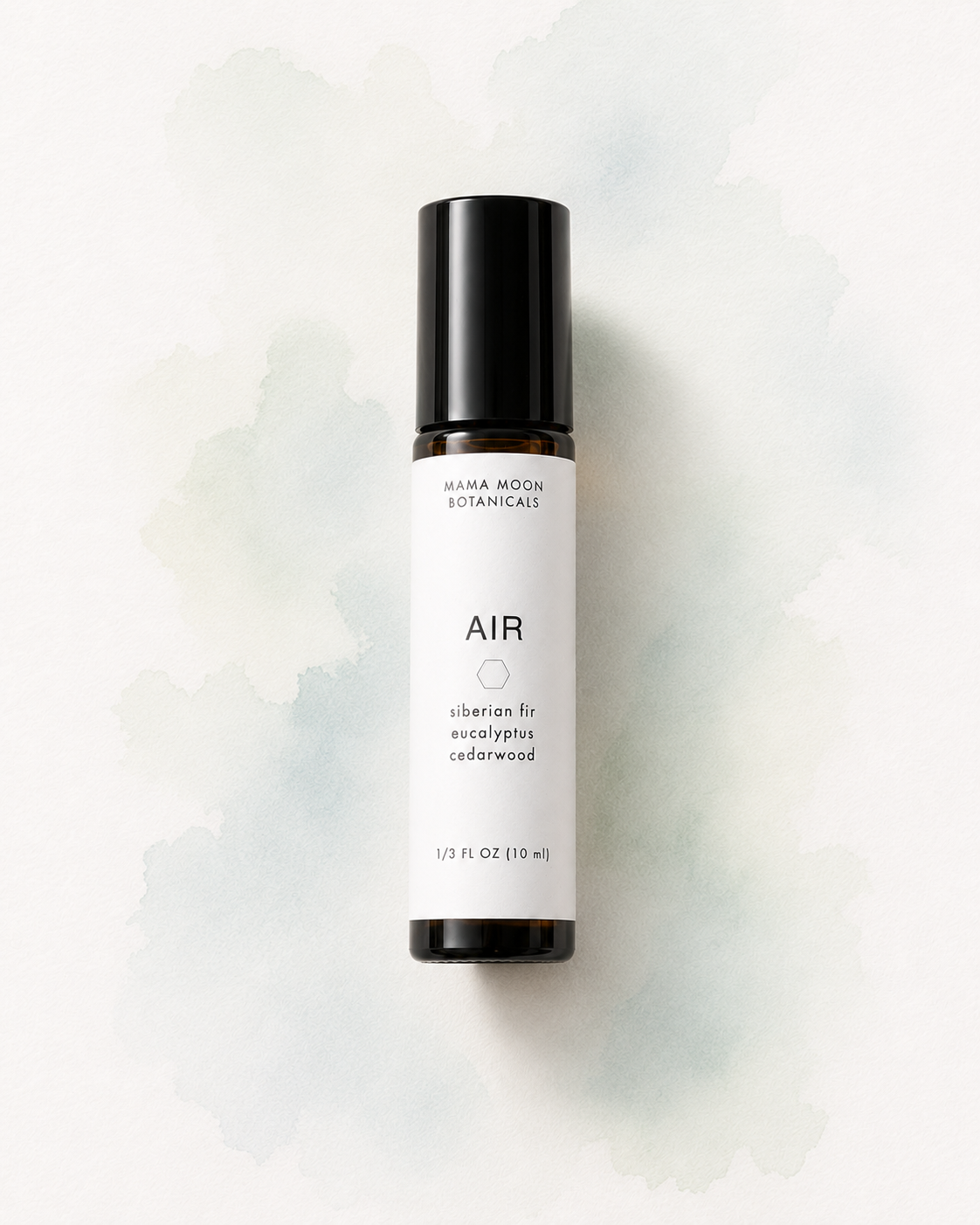
The Element of Movement
movement • breath • prana • creativity
If Ether is space, Air is what begins to move through it.
In Ayurveda, Air is called Vayu, the second of the five great elements.
Ether creates the space.
Then something stirs.
Movement begins.
That movement is Air.
We can’t actually see Air itself.
We see what it moves.
Branches shifting.
Leaves scattering.
Clouds crossing the sky.
Water changing direction.
Breath entering and leaving the body.
Thought moving from one idea to another.
Air is the force behind movement—and movement is one of the clearest signs of life.
from space into motion
The five elements unfold from subtle to dense.
Ether comes first: open, expansive, without form.
When the potential within that space becomes active, Ether gives rise to Air.
I love thinking about the elements this way because Air isn't simply something outside us that we breathe.
It is a principle of movement.
Anything that moves carries the qualities of Air.
Breath.
Circulation.
Nerve impulses.
Digestion.
The movement of joints and limbs.
Speech.
Thought.
Change itself.
Without Air, there may be space—but nothing moves through it.
Air in the body
Air expresses itself through motion throughout the entire body.
The breath moving in and out of the lungs.
Blood moving through the circulatory system.
Signals traveling through the nervous system.
The movement of food through digestion.
The joints carrying us through the world.
Even our thoughts are constantly moving.
Ayurveda connects Air intimately with prana, our vital life force.
Prana is often translated simply as breath, but it is much bigger than that.
Breath carries prana, but prana is the animating energy behind life and movement itself.
This is one reason breath plays such an important role in yoga and Ayurveda.
Changing the breath changes the quality of movement within us.
And often, the mind follows.
the five movements of prana
Ayurvedic and yogic philosophy describe this vital movement as flowing in different directions through the body.
There is movement inward.
Outward.
Upward.
Downward.
And movement toward the center.
These are traditionally known as the five vayus, or five movements of prana.
You don't have to memorize their Sanskrit names to understand the idea.
The body is constantly receiving.
Releasing.
Rising.
Grounding.
Centering.
Life depends on this circulation.
Healthy movement isn't simply movement for the sake of movement.
It has rhythm.
Direction.
And flow.
Air + touch
Air is also associated with the sense of touch.
The skin is where we encounter the world physically.
Warmth.
Cold.
Wind.
Pressure.
Texture.
A hand on the body.
Massage.
Oil.
Touch is incredibly grounding precisely because it gives something as subtle and mobile as Air a physical place to land.
I think about this often with nervous-system practices.
Sometimes we try to think ourselves into feeling calmer.
But the body may respond much more quickly to something tangible.
Warmth.
Pressure.
Massage.
Slow touch.
Feet on the ground.
The body reminds the mind where it is.
Air + the nervous system
This is probably one of the places I feel the Air element most clearly in everyday life.
The mind can move incredibly fast.
One thought.
Then another.
Then five more.
Plans.
Ideas.
Worry.
Possibility.
Creative energy.
The nervous system is constantly receiving and processing information.
When Air is balanced, this movement can feel wonderful.
Creative.
Curious.
Flexible.
Inspired.
Open.
We are able to adapt and change direction.
But movement can also become excessive.
Thoughts begin moving faster than we can follow them.
The body becomes restless.
Attention moves everywhere.
We feel overstimulated or unable to settle.
There is movement—but not necessarily direction.
And that distinction matters.
movement needs containment
Ayurveda never asks us to eliminate Air.
We need movement.
Too little movement becomes stagnation.
But too much movement becomes instability.
Healthy Air exists somewhere between the two.
Free enough to move.
Steady enough not to scatter.
I think that's such a useful way to understand balance.
Sometimes we need more Air.
Movement.
Fresh air.
Breath.
A new idea.
A different direction.
And sometimes we need the opposite.
Earth.
Warmth.
Routine.
Food.
Touch.
Rest.
Repetition.
Something steady enough to hold all that movement.
surrender + movement
There is another piece of the Air element that I really love.
Movement requires a certain amount of surrender.
You cannot control the wind.
You can respond to it.
You can adjust your sails.
You can protect yourself from a storm.
But you can't ask the air to remain still because stillness would be more convenient.
Life works much the same way.
Things change.
Plans change.
Bodies change.
Relationships change.
We change.
Air asks us to develop enough stability that movement doesn't automatically feel threatening.
There is a difference between being blown around by life and learning how to move with it.
Air + autumn
Autumn makes the Air element incredibly easy to see.
The leaves begin to fall.
Temperatures cool.
The wind picks up.
The environment becomes drier, lighter, and more mobile.
Everything is transitioning.
Ayurveda associates these qualities with Air and with Vata, the dosha formed primarily from Air and Ether.
This is why fall can sometimes feel exciting and creative—
and also a little unsettling.
The same movement that creates possibility can become restlessness when there is too much of it.
Nature becomes lighter.
So we add nourishment.
The weather becomes cooler.
So we create warmth.
The wind moves.
So we strengthen our roots.
Warm meals.
Routine.
Body oiling.
Earlier evenings.
Slow movement.
Touch.
Grounding.
We don't stop the season from changing.
We simply change with it.
the lesson of Air
For me, Air teaches something I seem to need over and over again:
movement is necessary—but movement needs somewhere to land.
Change can create possibility.
Breath can create space.
Movement can free what has become stagnant.
But we don't have to move constantly.
We don't have to follow every thought.
We don't have to respond to every bit of stimulation around us.
Sometimes we let the wind move through.
Sometimes we stand still and feel our feet.
Both are part of the practice.
AIR + MAMA MOON
BOTANICALS
When I created AIR for the Five Elements Collection, I wanted it to feel like walking into cool forest air and taking a deeper breath.
Camphoraceous.
Forest air.
Soft woods.
Artemisia • eucalyptus • Siberian fir • cedarwood.
Artemisia brings an herbaceous, almost wild quality.
Eucalyptus opens and clears.
Siberian fir carries the feeling of cool forest air.
And cedarwood gives the blend a soft woody base—something grounded underneath all that movement.
I didn't want AIR to feel sharp or medicinal.
I wanted it to feel expansive but still anchored.
For me, AIR carries the energetic qualities of:
movement • clearing • breath • creativity
A reminder to let life move—
without losing your center.
keep exploring
learn about Ayurveda + The Five Elements →
discover the Five Elements Collection →